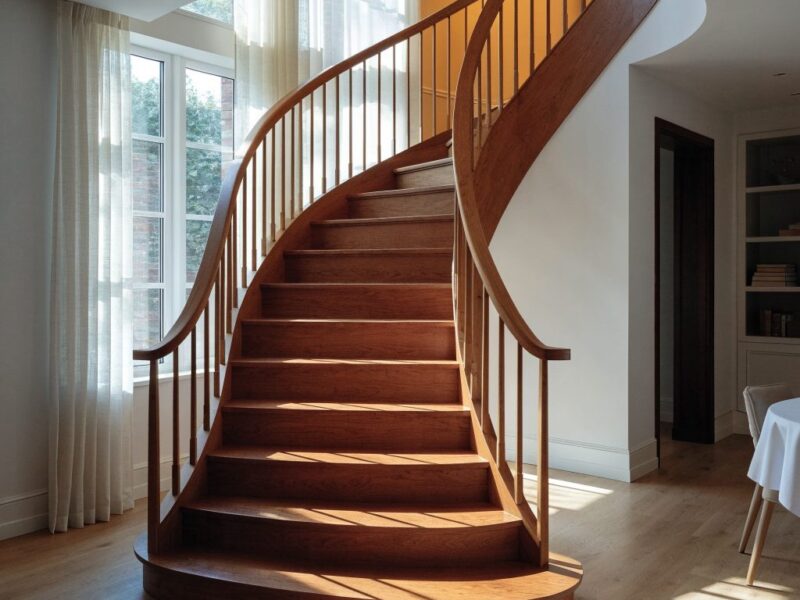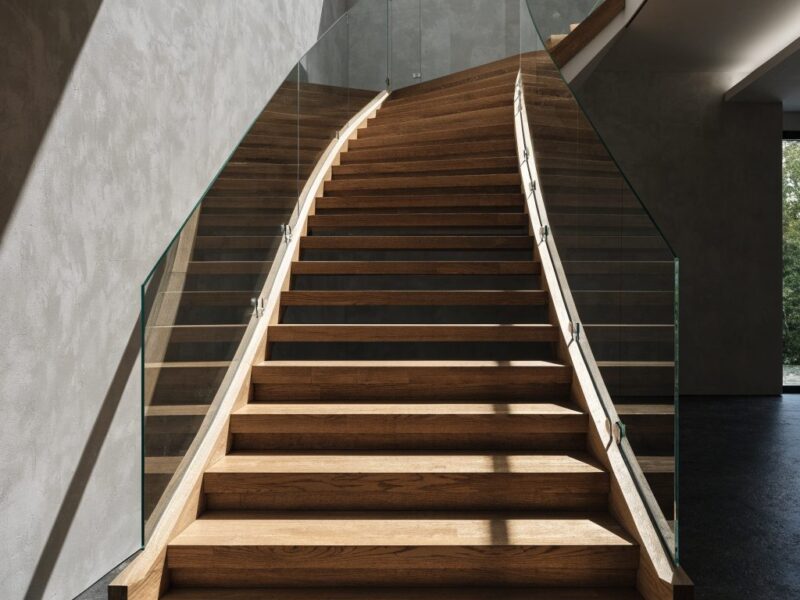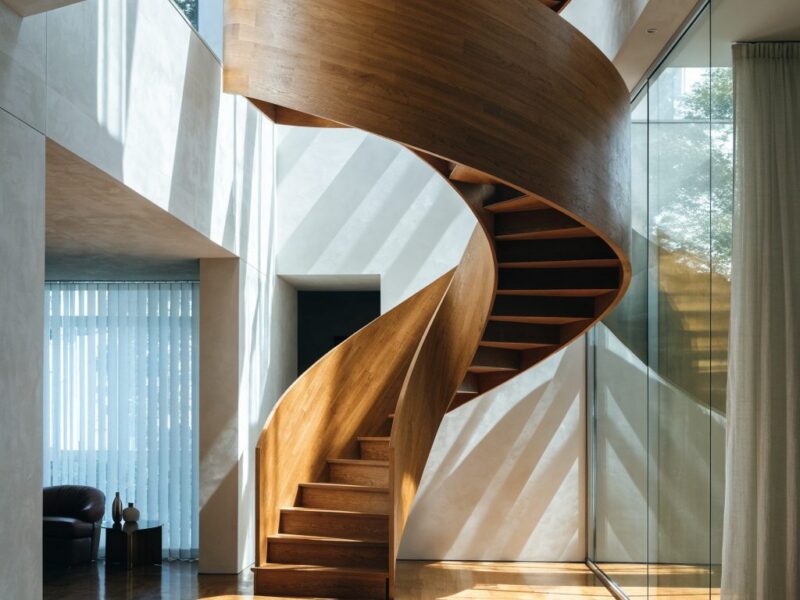
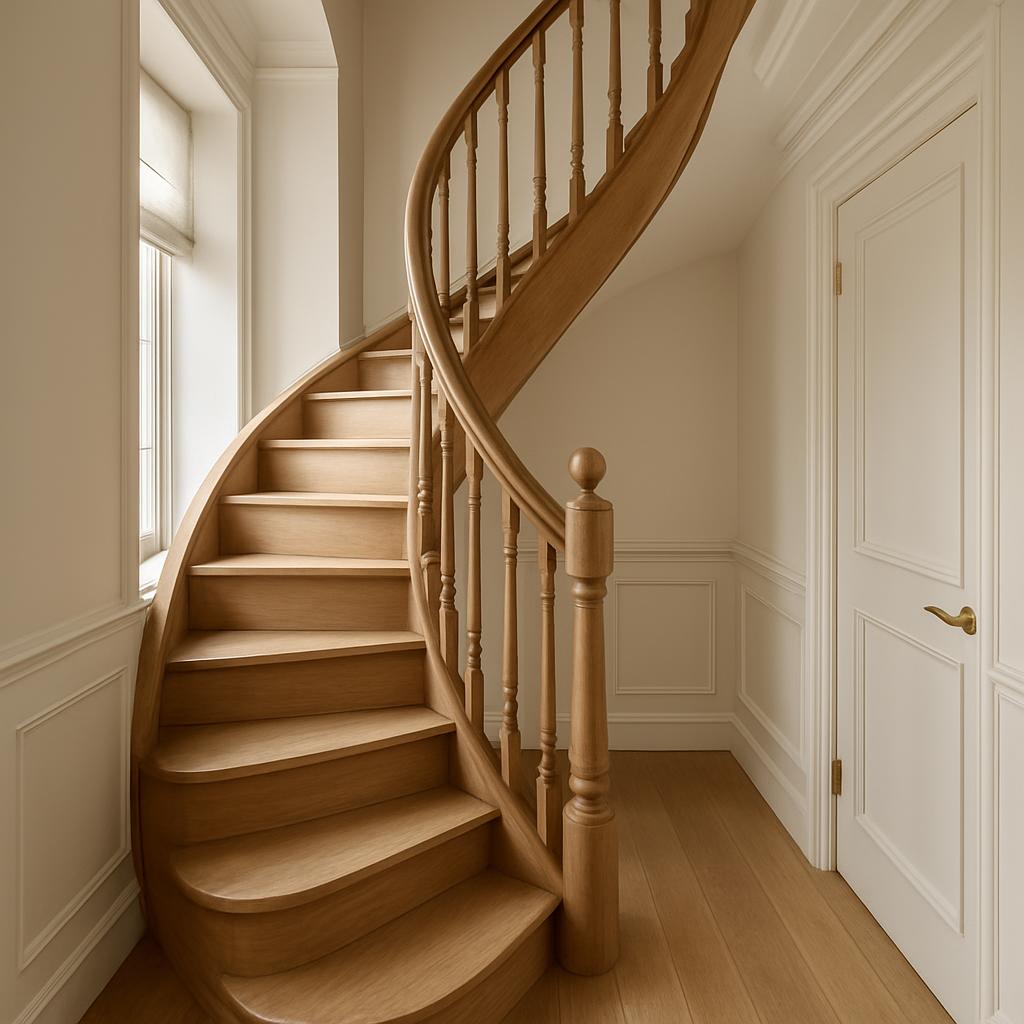
The bottom winder staircase is an innovative architectural solution ideal for compact spaces, allowing for a 90-degree turn right from the first step. This design not only saves significant floor area but also provides functional and aesthetic benefits for modern homes.
How does a bottom winder staircase work?
The bottom winder staircase features steps that are often trapezoidal or triangular in shape, enabling a sharp turn at the beginning of the flight. This allows homeowners to change direction immediately without the need for an intermediate landing. In practice, such a staircase maximizes space, making it particularly useful in smaller living environments.
Why is a bottom winder staircase beneficial in small homes?
A bottom winder staircase can save between 1 and 1.5 square meters of floor space compared to traditional staircases that include a landing. This space-saving design is crucial in homes with limited square footage, where optimizing every square meter has a direct impact on overall functionality. For instance, this additional area can enhance the usability of living rooms or hallways.
When should you consider a bottom winder staircase?
Consider a bottom winder staircase when designing homes in tight configurations, such as townhouses or during the renovation of attics. Because it allows for unique placements of the entrance, these staircases can fit seamlessly in spaces where conventional stairs might not. For example, they can be installed directly next to entrances or in narrow corridors, making them versatile for various layouts.
Which regulations affect bottom winder staircases?
In Poland, the width of the winder steps must not be less than 25 cm at a distance of 40 cm from the inner railing, as stipulated by safety regulations. Compliance with these guidelines ensures that the staircase is not only practical but also safe for users. Adhering to such regulations is essential for achieving a balance between innovative designs and user safety.
How much does a bottom winder staircase cost compared to other types?
The construction of a bottom winder staircase is generally more economical than that of double-run staircases with landings. Even though they require meticulous craftsmanship to accommodate variable step widths, the overall material and labor costs tend to be lower. This cost-effectiveness makes them an appealing option for budget-conscious homeowners.
What can be placed underneath a bottom winder staircase?
The area beneath a bottom winder staircase, often referred to as the „soul,” can be creatively utilized for storage solutions such as built-in cabinets for shoes or vacuums. This effectively optimizes space while providing practical solutions for everyday living. Utilizing this under-stair space is especially advantageous in smaller homes where every inch of space counts.
| Staircase Type | Floor Space Saved (m²) | Construction Complexity | Cost |
|---|---|---|---|
| Bottom Winder Staircase | 1 – 1.5 | Moderate | Lower |
| Traditional Staircase with Landing | 0 | Lower | Higher |
For those needing an effective and space-efficient staircase, a bottom winder staircase offers a remarkable blend of functionality and aesthetic appeal, suited for various living environments.