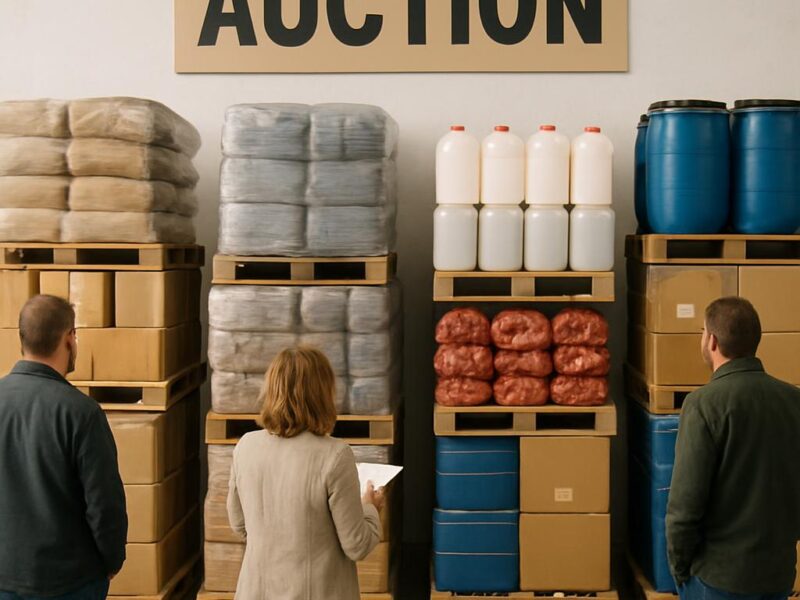
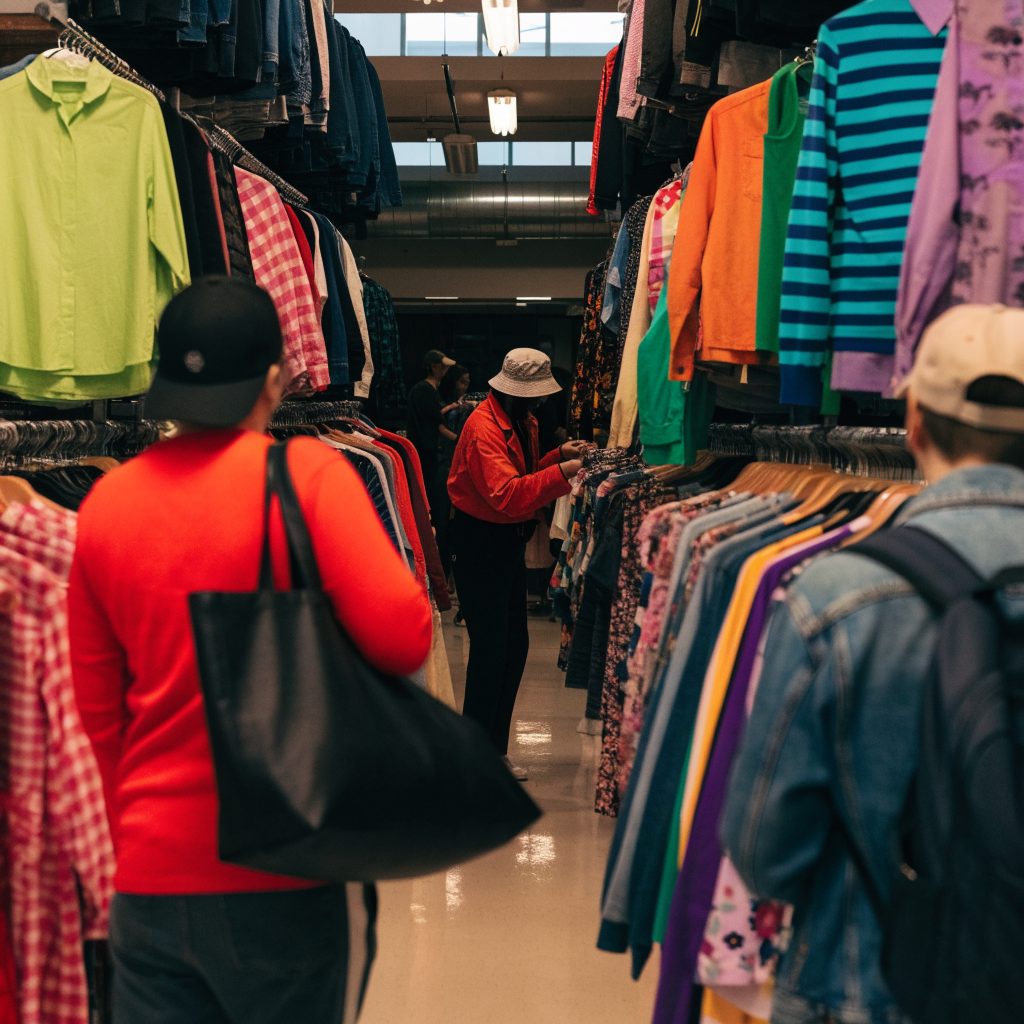
Outlet stocks can turn older, surplus, or channel-specific products into revenue while keeping full-price ranges distinct. We can protect margins by choosing outlet merchandise carefully, tracking inventory before it becomes dead stock, and counting rent and other operating costs in the channel’s profit calculation. A considered mix of outlet stocks can also introduce price-conscious shoppers to a brand without making discounting the default.
How do outlet stocks help retailers increase profitability?
Outlet stores can recover value from older or surplus merchandise and reach shoppers who would not buy at full price. Profit depends on whether the extra revenue covers the cost of the goods, the outlet’s rent, and other fixed operating expenses.
An outlet store is a retail channel selling lower-priced goods, which may be lower-quality versions of regular designs or products made specifically for outlets. The UT Dallas study by Dr. Gonca Soysal found an average discount of 40 percent for outlet products with designs similar to regular-store offerings. That discount can help clear stock, but it also means retailers need to assess the margin left after all channel costs.
Outlet adoption can support full-price sales as well as outlet revenue. In the UT Dallas study, customers who began shopping at outlets made more frequent purchases at the retailer’s regular stores, though they did not spend more on each visit. The authors did not directly test why this happened; one practical possibility is that outlet visits let price-sensitive shoppers try the brand before buying full-price items.
Does an outlet channel cannibalize full-price sales?
The UT Dallas study of a specialty apparel retailer with more than 400 retail stores and 100 exclusively sourced outlet stores found no evidence of cannibalization or brand dilution. That result applies to the retailer studied, so businesses still need to manage product selection and pricing to protect their main stores.
Cannibalization occurs when customers switch from full-price stores to cheaper outlet purchases, reducing main-store sales. Brand dilution is the loss of brand value when shoppers associate the brand with lower quality or constant discounting. Dual distribution means operating both higher-priced retail stores and lower-priced outlet stores; separating their assortments can help preserve a clear role for each.
Harvard Business School Working Knowledge described a manufacturer that continued making older designs for its outlets because adding more new designs there could draw customers away from its main stores. By contrast, Coach and Nordstrom were reported in the UT Dallas study as producing approximately 80 percent of outlet goods specifically for that channel. These approaches illustrate two ways to manage assortment: move older designs out of the main range, or create outlet-exclusive products.
Which products should go to an outlet?
Retailers can direct aging or surplus products to outlets while reserving new designs and the strongest full-price assortment for their main stores. The right choice depends on product fit uncertainty, customer preferences, travel sensitivity, and the cost of operating each location.
Product fit uncertainty is uncertainty about whether outlet merchandise will suit shoppers’ preferences. Travel sensitivity describes how willing customers are to travel to an outlet. Research by Bai, Gurnani and Yin in Production and Operations Management found that customer dispersion encourages firms to offer outlets for better market coverage; the outlet may be near a main store or at a remote location depending on these and other factors, including fixed costs.
A factory outlet is the traditional form of outlet, historically located near a factory and selling seconds or excess merchandise. Outlet stores first appeared in the 1930s, often in rural areas, where damaged or irregular clothing was sold, sometimes to factory employees. An outlet-within-a-store brings discount shopping into the same location as the main store, which changes how shoppers encounter the two assortments.
How can retailers use inventory measures to reduce dead stock?
Retailers can monitor sell-through and inventory turnover to identify slow-moving products early, then decide whether to reorder, mark down, or move stock to an outlet. Dead stock is merchandise that has stopped selling and ties up cash and shelf space.
Sell-through rate is the share of received stock that has sold over a chosen period. Retailers can compare it with sales history before reordering: strong movement may support replenishment, while weak movement calls for checking demand and considering a markdown or outlet transfer. Inventory turnover measures how quickly stock sells and is replaced, helping teams spot products that are lingering.
General retail guidance has noted that by late 2025 the typical U.S. business was holding over a month’s worth of sales in stock. A 2026 National Federation of Independent Business survey also found small-business inventory levels at their highest point since January 2023. These figures make regular stock review especially useful: an outlet can serve as a planned clearance channel rather than a last-minute response to excess inventory.
How should retailers measure outlet performance?
Retailers should assess outlet profitability after merchandise, rent, and fixed costs, rather than treating sales revenue alone as success. The available research does not quantify a general net profit-margin effect, so each business needs to calculate the result using its own costs and sales.
For store operations, sales can be viewed as footfall multiplied by in-store conversion rate and average transaction value. In-store conversion rate is the share of visitors who buy, while average transaction value, or ATV, is revenue per transaction; units per transaction, or UPT, tracks the number of items in each basket. A planogram, the planned arrangement of products and displays, can help keep key merchandise visible. Teams should also watch for stockouts, when an item is unavailable and a potential sale is missed.
The table below summarizes the store measures that help connect customer activity to sales and stock decisions.
| Measure | What it tracks | How retailers can use it |
|---|---|---|
| Footfall | Visitors entering the store | Assess whether location and store presentation attract shoppers |
| In-store conversion rate | The share of visitors who make a purchase | Review service, product availability, and the shopping experience |
| Average transaction value | Revenue per transaction | Assess whether product combinations and service support larger purchases |
| Units per transaction | Items in each basket | Monitor basket size and product pairing |
| Sell-through rate | The share of received stock that sells | Guide replenishment, markdown, and outlet-transfer decisions |
In TruRating’s 2025 consumer polling, 25% of shoppers said they came in “just to browse.” The same polling found that customers who reported being offered help spent 26% more per transaction than those who were not offered help. Retailers can use these findings as prompts to assess service and browsing behavior, without assuming the same result will apply to every store.
How can a retailer put an outlet plan into practice?
A practical plan connects assortment decisions with inventory signals and the full cost of the outlet channel. We can use the following sequence to make decisions before slow-moving products become a larger burden.
- Review sell-through and inventory turnover by product, and flag stock that is slowing down.
- Decide whether each item belongs in a reorder, a full-price markdown, or the outlet assortment.
- Keep new designs separate where they could weaken full-price demand; consider outlet-exclusive products where that fits the brand.
- Estimate outlet revenue against merchandise costs, rent, and other fixed expenses, accounting for location and customer travel sensitivity.
- Track footfall, conversion, ATV, UPT, and stockouts, then adjust the assortment and store presentation.
Sources
- UT Dallas News, Dr. Gonca Soysal study (news.utdallas.edu)
- Harvard Business School Working Knowledge, Donald K. Ngwe (hbs.edu)
- Production and Operations Management, Vol. 31, Issue 1, Bai, Gurnani and Yin (onlinelibrary.wiley.com)
- TOP 20 OUTLET MARKETING STATISTICS 2026 REVEAL … (amraandelma.com)
- Retail Loss in 2026: The 9× Bigger Leak That Isn’t Theft (ihlservices.com)