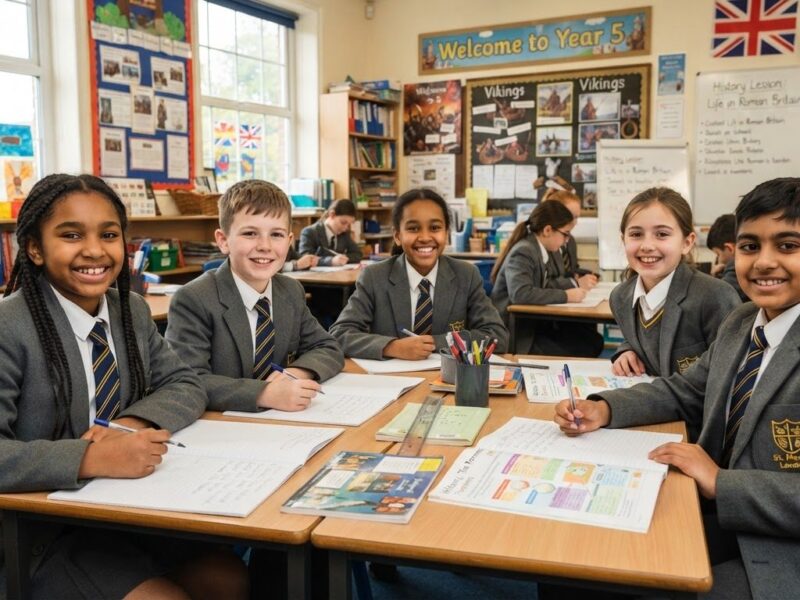
When we help families settle into a new Polish rental, the study corner is often planned before the school budget is fully understood. In practice, the choice of city changes more than the commute: it can determine whether tuition takes up a manageable part of the household plan or becomes its largest annual expense. We therefore look at school fees alongside room layout, transport, lunches and the practical needs of children following British, American or IB programmes.
The city sets the starting point for the school budget
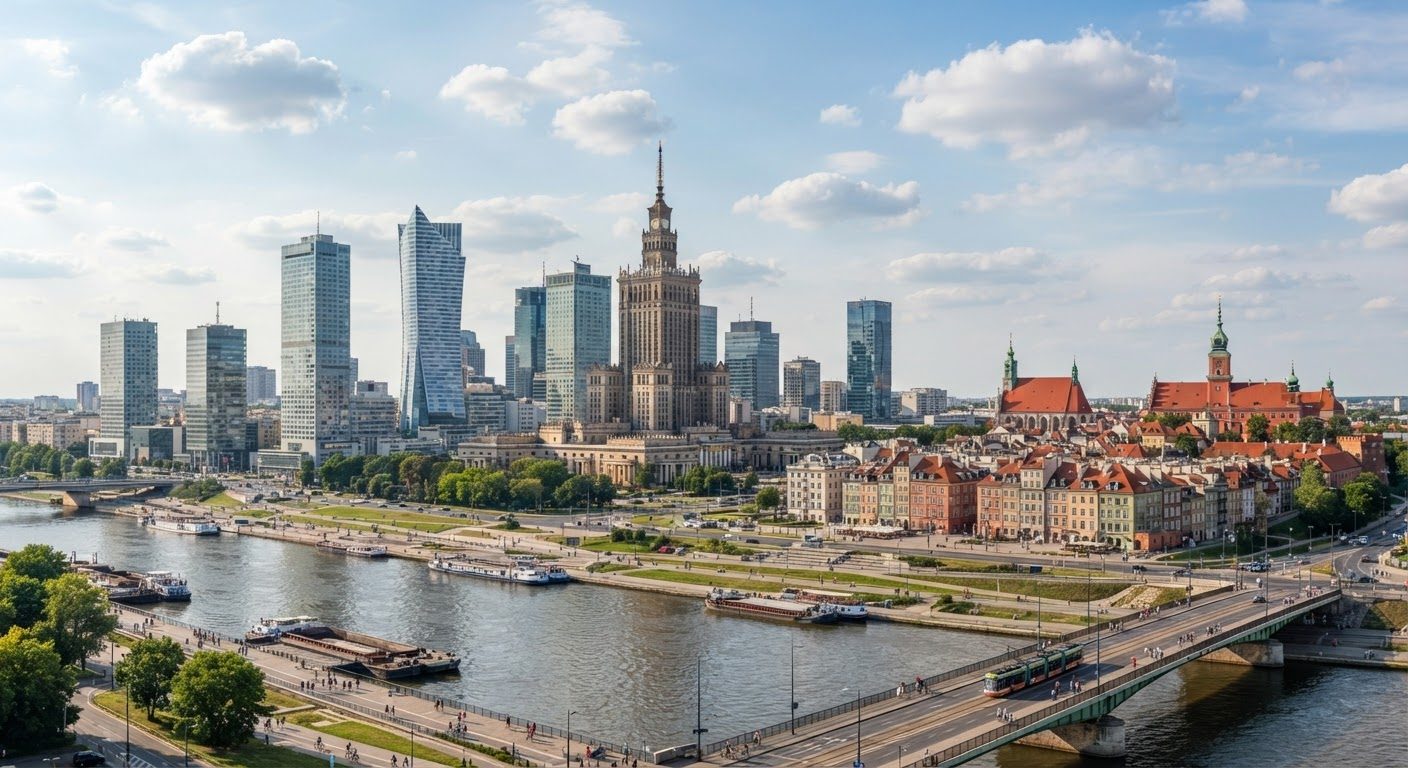
Poland has 69 international schools across 14 cities, including 24 in Warsaw, 10 in Kraków and 2 in Katowice, according to the International Schools Database. That distribution gives Warsaw the broadest choice, but not necessarily the lowest price.
Warsaw is the most expensive, with top-tier international schools charging 100,000 to 130,000 PLN annually. Kraków offers mid-to-high options typically between 45,000 and 95,000 PLN, while Katowice is the most affordable of the three, with established fees ranging from roughly 33,300 to 53,430 PLN per year.
In Warsaw, The British School Warsaw is a tier-one institution in Wilanów offering British and IB pathways. Its published 2026/27 fees run from 52,800 PLN for Pre-Nursery to 129,940 PLN for Years 12–13, according to Expat Essentials, 2026. Thames British School Warsaw, which combines British, IB and international curricula, lists fees from 56,000 PLN to 99,950 PLN.
There is also a substantial lower-cost range in the capital. Lycée Français de Varsovie has tuition from 25,000 to 50,000 PLN, while Canadian International School of Warsaw charges 42,150 PLN to 51,000 PLN for children aged 3 to 14. These alternatives can leave more room in the household budget for a proper desk, task lighting and storage rather than forcing every furnishing decision to be temporary.
Kraków offers a wider middle ground
In Kraków, annual tuition typically ranges from 35,000 to 55,000 PLN for Early Years, 45,000 to 70,000 PLN for Primary, and 65,000 to 95,000 PLN for Secondary/IB Diploma programmes, with leading institutions like the International School of Krakow charging roughly 45,683 to 74,868+ PLN.
The International School of Krakow is an established full-continuum IB World School. Its 2026/27 tuition is 45,683 PLN for Early Years, covering ages 3–4, and 74,868 PLN for Grades K–12. Families comparing schools should check whether the quoted amount covers the whole year, only a particular grade band or a specific programme such as the IB Diploma.
At the more affordable end, Wawel International School in Kraków lists annual fees from 22,500 zł to 36,000 zł. This creates a much wider local spread than a simple city average suggests. Two schools in the same city may serve very different budgets, age groups and curriculum goals.
For families considering a study area, Kraków’s middle-range pricing can make it easier to plan for a larger desk, adjustable chair and closed shelving. That matters when children move between online research, language work and project materials during the same evening.
Katowice changes the calculation for growing families
Complex of Silesian International Schools is a Katowice school for ages 3 to 18 offering British and IB curricula. Its annual fees range from 33,300 zł to 53,430 zł, as reported by the International Schools Database.
Katowice is significantly cheaper than Warsaw’s premium segment and generally below the upper end of Kraków’s international-school market. The lower tuition range may be especially useful for families with two or more children, although the final comparison still depends on registration charges, meals, transport and the year group.
City choice should not be reduced to tuition alone. Rent, commuting time, access to school transport and the possibility of sharing furniture between siblings can change the total household picture. A smaller rental in a well-connected area may work better than a larger home that requires expensive daily transport.
What the annual budget really contains
Established international schools in Poland generally cost approximately 46,000 PLN to 130,000 PLN per year, with an average of 50,000 to 80,000 PLN across major cities, according to Expat Essentials, 2026. Budget or bilingual options can start around 25,000 to 33,000 PLN, while senior years at premium schools reach the highest levels.
Tuition is only one layer. Kraków schools may also charge application fees of PLN 500–1,500, enrolment deposits of PLN 5,000–15,000 and capital levies of PLN 5,000–20,000. Lunches can add PLN 6,000–10,000 per year, and transport may cost PLN 5,000–12,000 annually. In Warsaw, one-time registration or capital fees commonly range from €500 to €3,000.
A Capital Levy is a mandatory, often non-refundable one-off payment intended to support school facilities. Before signing a lease or accepting a place, we should ask whether this payment is refundable, charged per family or per child, and due immediately or in instalments. A useful planning reference for comparing international school fees Poland is to separate recurring tuition from these one-off charges.
A realistic school budget should combine tuition, compulsory levies, meals, transport and enrolment costs rather than treating the advertised annual fee as the final amount.
Public education offers a different baseline. Polish public school tuition is 0 PLN, although families still spend approximately 7,000 PLN per year on meals, clubs and extras, according to Expat Essentials, 2026. The trade-off is not simply price: families also consider language of instruction, admissions availability, curriculum portability and whether a child can settle quickly.
Curriculum affects both value and future flexibility
The British curriculum, including Cambridge and A-Levels, is the most common international model in Poland and represents roughly 50% of international schools. The IB framework, made up of the Primary Years Programme, Middle Years Programme and Diploma Programme, accounts for about 30%, while American systems represent around 15%.
British and IB pathways can be useful for families expecting another international move. The Polish Matura, by contrast, is the national secondary-school examination and provides direct access to free Polish university education. The right choice depends on where the child may study next, not just on the school’s brand or the appearance of its campus.
Academic indicators can also provide context. Polish students scored above the OECD average in all three PISA 2022 domains: 489 in Mathematics, 489 in Reading and 499 in Science, according to Expat Essentials, 2026. These results do not replace a school visit, but they remind us that an international curriculum is not automatically the only route to strong academic preparation.
In practice, we advise families to price the school place and the daily routine together. A lower tuition bill can lose its advantage if transport is lengthy, lunches are compulsory or the rental needs expensive changes to support homework and rest.
Most common mistakes
- Comparing a nursery fee in one school with a senior-year fee in another without checking the age band.
- Assuming that tuition includes meals, transport, books, activities or examination charges.
- Ignoring the capital levy or enrolment deposit when calculating the first-year cost.
- Choosing a curriculum without considering university plans or a possible move to another country.
- Signing a lease before confirming the school commute and available transport routes.
- Planning an attractive study corner but forgetting storage, power sockets and a quiet place for video lessons.
A practical budgeting recipe for a new Polish home
To make the comparison usable, we can treat the move like a recipe. The exact proportions below come from the available school-fee data and should be checked against each school’s current offer:
- One base tuition figure: choose the annual fee for the child’s exact year group.
- One enrolment allowance: add the relevant application fee of PLN 500–1,500 where charged.
- One deposit component: allow for PLN 5,000–15,000 if the school requires an enrolment deposit.
- One capital component: check for a Capital Levy of PLN 5,000–20,000 in Kraków or a Warsaw registration or capital fee of €500–€3,000.
- One daily-services component: include lunches of PLN 6,000–10,000 and transport of PLN 5,000–12,000 where applicable.
- One home-study component: reserve part of the moving budget for a desk, supportive chair, task light, cable management and storage.
The most useful comparison is the first-year total, because deposits and levies can make an apparently affordable school more expensive at the start.
For a family deciding between cities, the practical sequence is straightforward: shortlist the curriculum, compare the exact age-related fees, add compulsory extras, then test the commute against the rental location. Only after that should we decide how much space the study corner needs and whether one shared workstation or separate desks will work better.
Sources
- List of International Schools in Poland – 69 schools (international-schools-database.com)
- International Schools In Poland: Fees & Options 2026/27 (expatessentials.pl)
- International School Fees in Krakow | Cost Guide 2026 (ischooladvisor.com)
- ExpatSchoolGuide international school fee comparisons (expatschoolguide.com)