
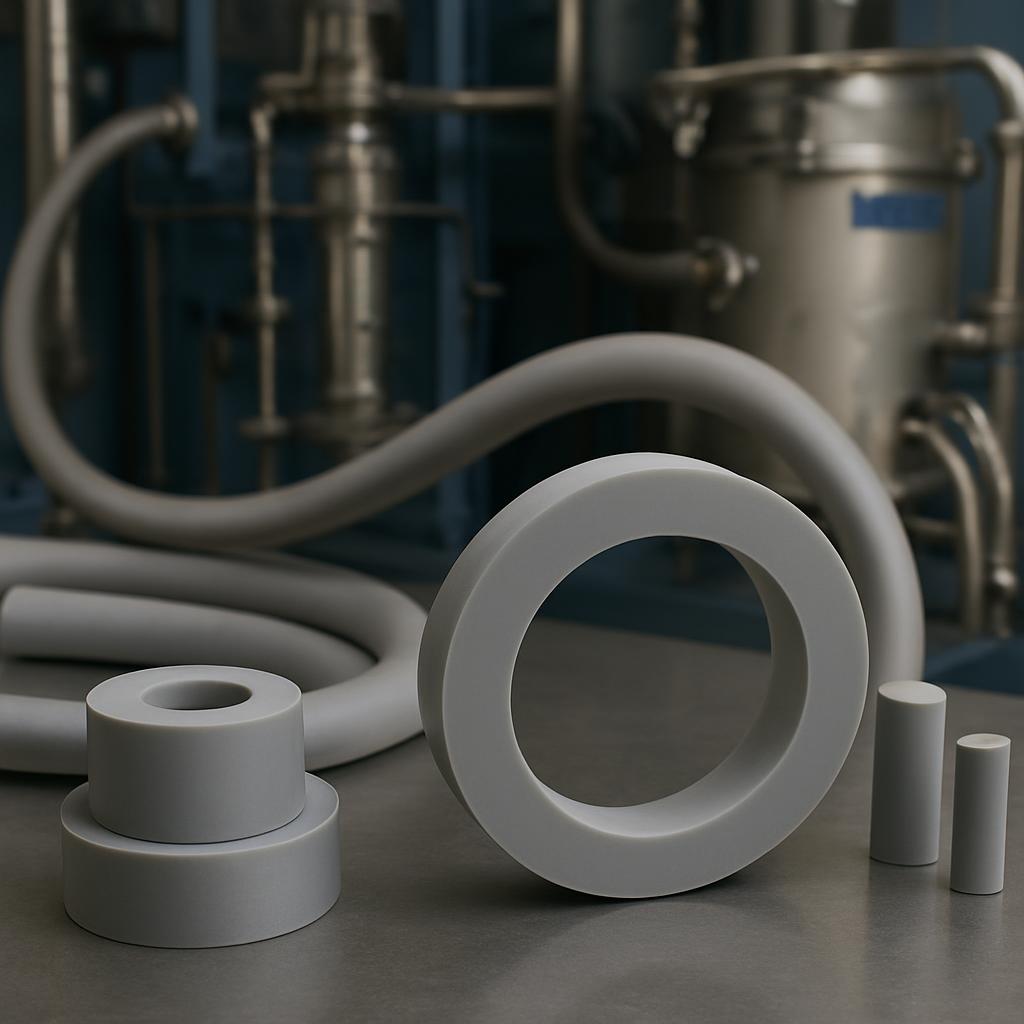
HCR silicone is an exceptional material that offers unmatched mechanical strength, thermal stability, and resistance to environmental factors, making it a prime choice for high-performance applications in various industries. Its unique properties ensure safety, durability, and reliability under critical working conditions.
How does HCR silicone compare to other materials in terms of mechanical strength?
HCR silicone exhibits superior mechanical strength compared to conventional elastomers and liquid silicone rubbers (LSR). This enhanced durability is essential in manufacturing technical seals and profiles, especially in demanding industrial environments. For instance, HCR’s resistance to tear and abrasion makes it ideal for products subjected to heavy wear, ensuring longevity and performance.
Does HCR silicone maintain performance in extreme temperatures?
Yes, HCR silicone maintains its properties across a wide temperature range, from -50°C to +300°C, especially when appropriate stabilizers are used. This remarkable thermal stability is crucial for applications in the automotive and aerospace industries, where components may be exposed to extreme conditions. For example, automotive under-the-hood applications require materials that can withstand high heat without degrading.
When should HCR silicone be used for electrical insulation?
HCR silicone should be used for electrical insulation when high dielectric strength and resistance to partial discharge are required. Its excellent electro-insulating properties make it suitable for high-voltage insulators and cable jacketing. This ensures safe operation in energy sectors, preventing failures caused by electrical faults.
How resistant is HCR silicone to environmental factors?
HCR silicone displays exceptional resistance to ozone, UV radiation, and severe weather conditions, which allows for prolonged outdoor use without structural degradation. Its durability under various environmental stresses makes it ideal for external applications, such as seals in construction or automotive exterior parts.
Which applications benefit from HCR silicone’s biocompatibility?
HCR silicone’s biocompatibility is advantageous in medical applications, as it complies with strict certifications such as FDA and ISO 10993. This allows its use in devices like catheters and drains that come into contact with bodily fluids. The safety provided by HCR silicone is critical in ensuring patient health and product reliability.
How does HCR silicone contribute to manufacturing efficiency?
HCR silicone contributes to manufacturing efficiency through its ideal consistency for extrusion and molding processes. Its properties enable the production of intricate seals and profiles while minimizing waste, thus enhancing overall productivity. Manufacturers can create complex geometries that are essential for modern engineering applications, ensuring precision and functionality.
| Property | HCR Silicone | Liquid Silicone Rubber (LSR) |
|---|---|---|
| Tear Strength | Higher | Lower |
| Thermal Stability | -50°C to +300°C | -60°C to +200°C |
| Electroinsulating Capabilities | Excellent | Good |
| Environmental Resistance | Outstanding | Moderate |
| Biocompatibility | Yes | Limited |
In summary, HCR silicone is the ideal choice for high-performance applications due to its unmatched properties, making it widely applicable in various sectors such as automotive, electrical, and medical. The benefits it provides in terms of durability, safety, and manufacturing efficiency clearly position it as a leading material in modern engineering.