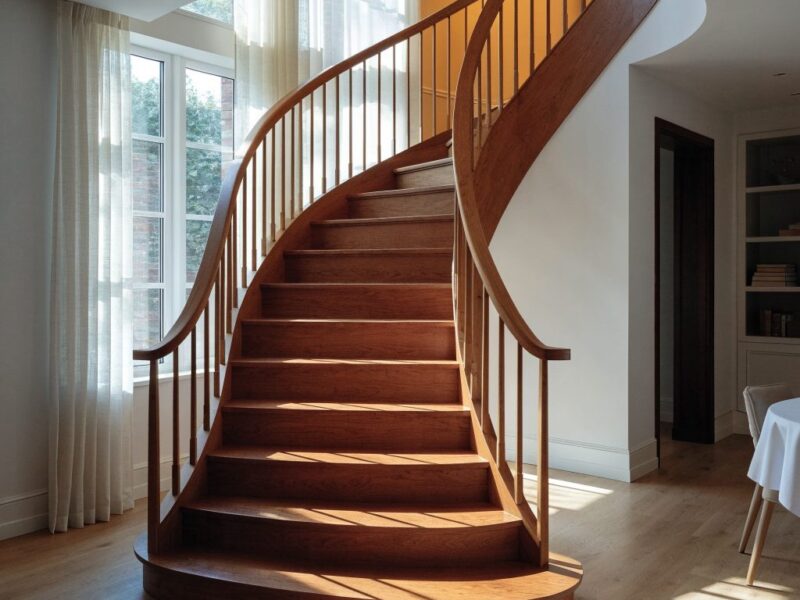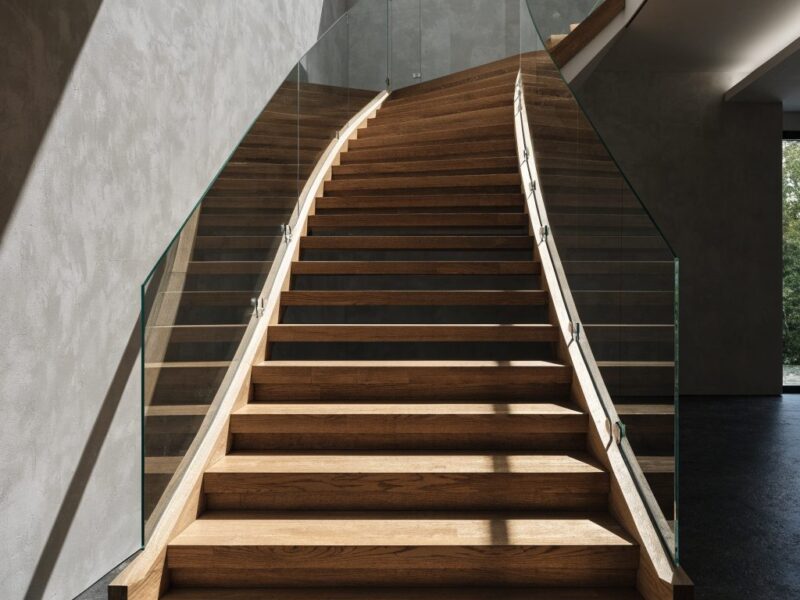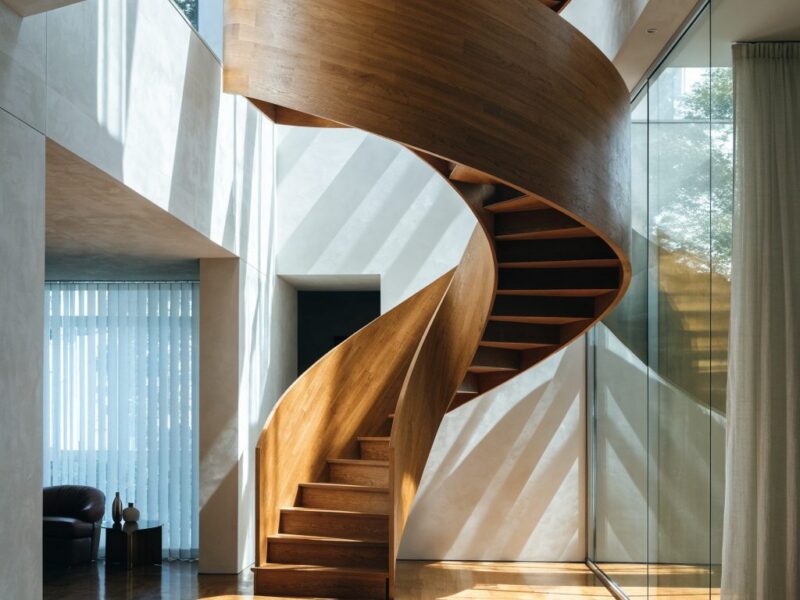
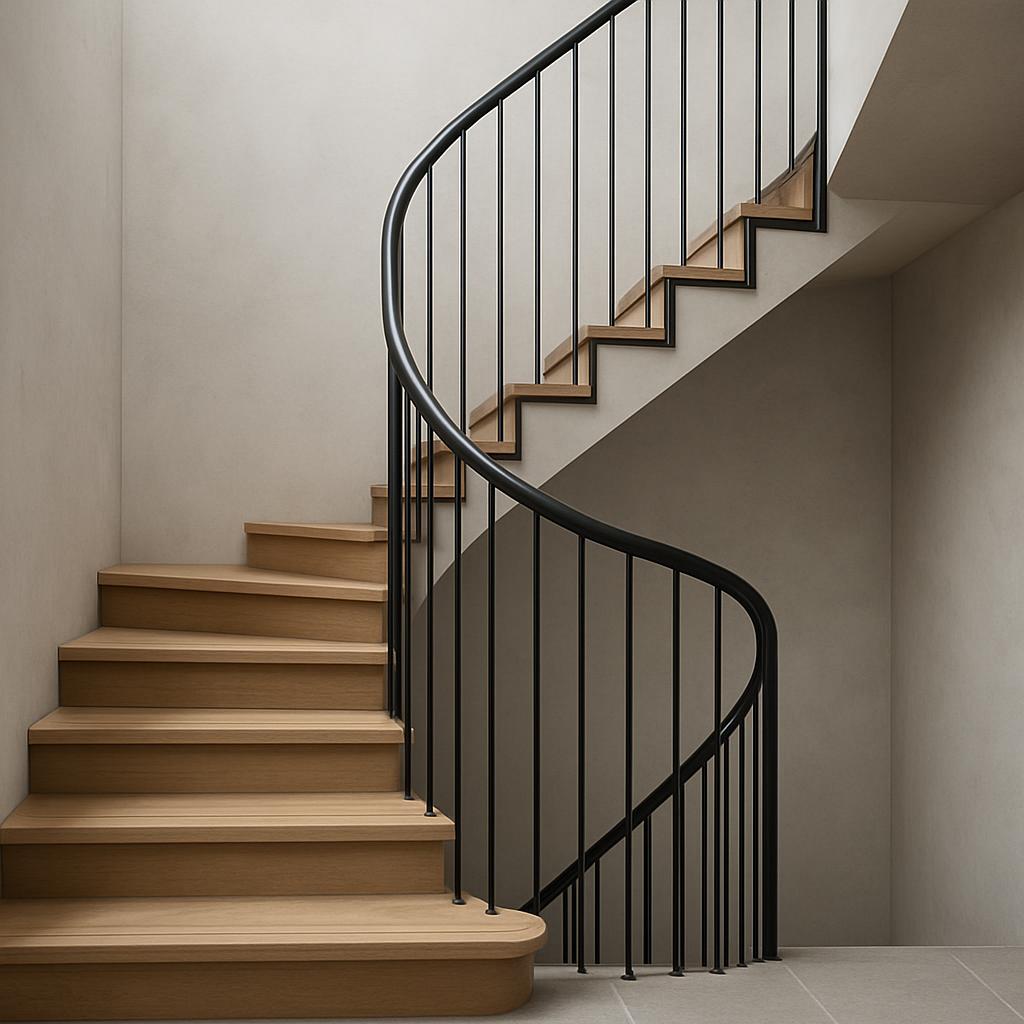
Stairs with turn at bottom offer effective solutions for optimizing space, particularly in narrow hallways typical of Polish single-family homes. These stairs reduce the overall length of construction while providing elegant design possibilities and enhanced functionality.
How do stairs with turn at bottom enhance space utility?
Stairs with turn at bottom maximize the available area by shortening the main run, making them ideal for compact spaces. This feature is especially beneficial in small homes where every square meter counts, allowing for a more practical layout. For instance, using a triangular step instead of a landing can save up to 2 square meters of floor space.
When are stairs with turn at bottom preferable in design?
These stairs are preferable in scenarios where space optimization is crucial, particularly in narrow corridors or entryways. By incorporating a turn at the bottom, designers can create a visually appealing transition between levels while also maintaining the necessary safety and functional standards. Many modern residences utilize this design to blend aesthetic value with practicality.
What safety standards should be considered for stairs with turn at bottom?
Safety is paramount in stair design, and the regulations dictate a minimum usable width of 80 cm and a maximum step height of 19 cm. Adhering to these guidelines ensures that the stairs remain safe and functional, especially at the point where the direction changes. Ensuring good visibility with adequate lighting can further enhance safety by helping to prevent accidents during use.
Which features improve the functionality of stairs with turn at bottom?
Increased functionality can be achieved by integrating features such as built-in storage solutions or enhanced ergonomic designs at the first few steps. For example, the initial steps can be rounded and widened, improving accessibility and creating a more inviting entrance. This design consideration not only offers aesthetic appeal but also supports movement from different directions, making it easier for residents and guests to navigate the space.
How can lighting enhance the safety of stairs with turn at bottom?
Proper lighting significantly enhances the safety of stairs with turn at bottom. It is advisable to install recessed LED lights to illuminate the area where the direction changes. This ensures that the steps are adequately lit, reducing the risk of trips and falls, especially in low-light conditions, thus emphasizing the importance of thoughtful lighting design in stair construction.
What are the advantages of using triangular steps instead of landings?
Utilizing triangular steps instead of traditional landings offers distinct advantages, including saving space and enhancing overall design efficiency. This approach not only conserves valuable floor area but also allows for creative solutions like built-in cabinetry or shelving under the stairs. Consequently, homeowners benefit from a more organized and aesthetically pleasing living space.
| Feature | Stairs with Turn at Bottom | Traditional Stairs |
|---|---|---|
| Space Efficiency | High – uses less floor area | Moderate – requires more space |
| Storage Options | Customizable – under-stair storage | Limited – unless designed with landings |
| Safety Considerations | Requires careful lighting and measurements | Standard safety measures apply |
| Design Flexibility | Can incorporate elegant entrance solutions | More straightforward, less dynamic |