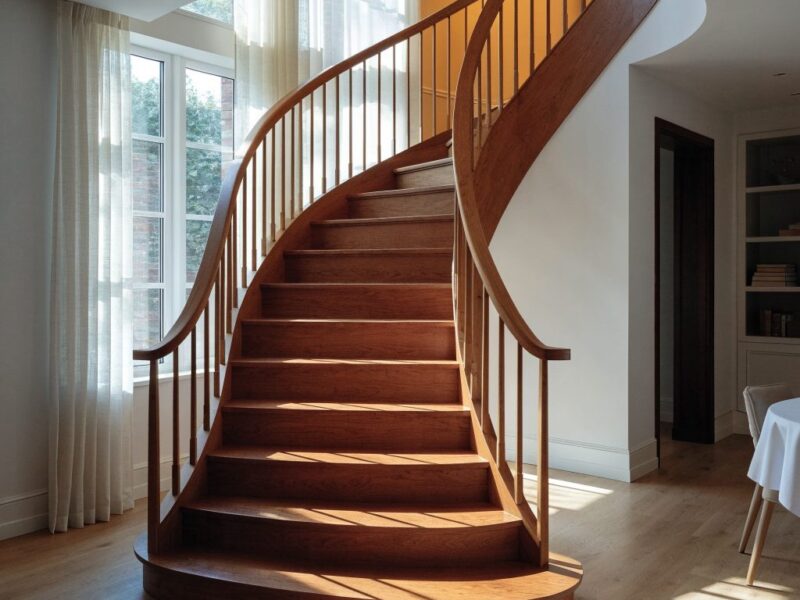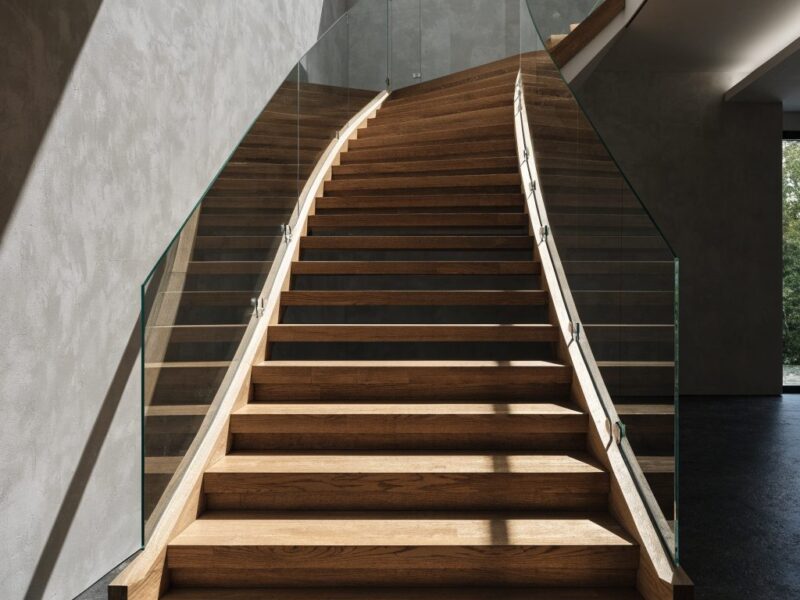
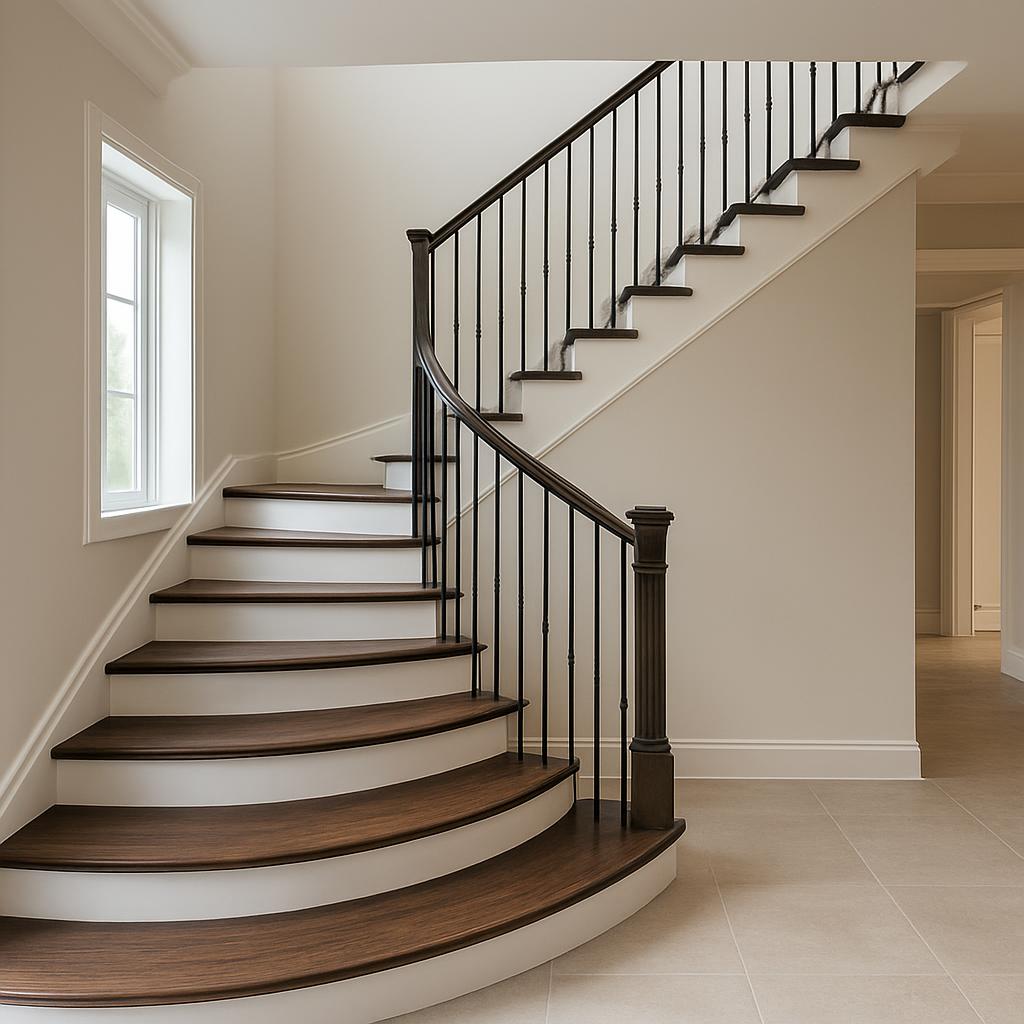
Schody zabiegowe typu L łączą w sobie funkcjonalność, estetykę i oszczędność miejsca, co czyni je popularnym wyborem w polskim budownictwie jednorodzinnym. Stosują się w nowoczesnych projektach wnętrz, umożliwiając płynny zwrot o 90 stopni bez zabierania cennej przestrzeni. Idealne do różnych stylów aranżacyjnych, schody te zapewniają również wysoki komfort użytkowania i bezpieczeństwo.
How do L shaped winder stairs save space?
L shaped winder stairs are designed to change direction without the need for a landing, effectively saving space. This design results in approximately a one-meter reduction in the overall length of the staircase compared to traditional designs that require a landing.
This practicality is crucial, especially in smaller homes where space optimization is a priority. By eliminating the need for additional landings, these stairs can fit into tighter corners and areas of a room. For example, many homeowners find that an L shaped winder staircase can be snugly placed in a corner near a window, enhancing the room’s visual appeal while maximizing floor space.
When do legal requirements apply to L shaped winder stairs?
Legal requirements are crucial in the design of L shaped winder stairs to ensure safety and functionality. According to Polish building law, the width of the tread near the inner railing must not be less than 25 cm, which is necessary for user safety and comfort.
These regulations help maintain a standard that protects users from potential accidents. For instance, adhering to these dimensions ensures that individuals can ascend and descend the stairs without fear of falling, which is particularly important in family homes or public buildings.
Does eliminating the landing improve the flow of communication in a space?
Yes, the absence of a landing in L shaped winder stairs promotes a continuous rhythm of movement, enhancing the flow of communication in a space. This uninterrupted ascent and descent are highly valued in modern interior designs.
This design approach aligns well with open floor plans, allowing a seamless transition between levels. In homes with a loft or open living areas, for example, the continuous rise appeals to many homeowners who appreciate easy movement from one space to another.
Which materials are suitable for constructing L shaped winder stairs?
L shaped winder stairs can be constructed using various materials, predominantly wood or concrete, depending on the desired look and functionality. Wooden, openwork designs are favored for their aesthetic appeal, while concrete steps can be finished with wood for a sleek look.
This choice between materials allows homeowners to customize the stairs according to their preference and the overall design of the house. For instance, a wooden staircase can be a beautiful focal point in a modern interior, while a concrete structure may lend itself to a more industrial aesthetic.
How important is safety in the design of L shaped winder stairs?
Safety is a critical component in the design of L shaped winder stairs. The narrowest part of the tread should not be less than 10-16 cm to minimize the risk of tripping.
This standard is essential for providing a secure environment, particularly in homes with children or elderly residents. Ensuring proper dimensions makes these stairs not only stylish but also safe for everyday use.
What design opportunities do L shaped winder stairs offer?
L shaped winder stairs offer numerous design opportunities, allowing homeowners to create unique and personalized spaces. Their ability to fit into corners and maximize light makes them ideal for various interior styles.
For example, placing L shaped winder stairs near a corner window can enhance natural lighting while making a small space feel more expansive. This adaptability allows for a range of designs, from minimalist and airy to more elaborate and built-in staircases with storage underneath.
| Feature | L Shaped Winder Stairs | Traditional Stairs |
|---|---|---|
| Space Efficiency | High, saves about 1 meter | Lower, requires additional landing |
| Flow of Movement | Continuous ascent/descent | Less fluid due to landings |
| Materials | Wood, concrete | Wood, concrete, metal |
| Safety Standards | Wider treads, safer design | May lack variable width for treads |
For more information on l shaped winder stairs, there are many options to fit various home designs and preferences.