Constructing your own staircase can be a rewarding DIY project that enhances your home. This guide offers you a step-by-step approach to building sturdy and comfortable stairs while adhering to local regulations. Follow these instructions to ensure safe and elegant stairs that match your home’s design.
How to design the stair dimensions?
To design comfortable stair dimensions, you can use the formula $2h + s = 60–65$ cm, where h is the height of the step and s is its width. This formula helps create a balance between the height and width that contributes to safety and usability.
In practice, a step height of 17 cm and a width of 29 cm is often considered optimal for user comfort. Such design minimizes the likelihood of tripping and maximizes ease of use.
Which materials are best for DIY stairs?
The most popular materials for DIY stairs include hardwood species such as oak, ash, and beech for their durability. In contrast, pine may be more affordable but lacks the toughness needed for long-term use. Choosing the right material affects both the sturdiness and aesthetics of your stairs.
For maximum lifespan and resistance to wear, hardwood such as oak is recommended, while pine may require more frequent replacements.
How to ensure stair safety?
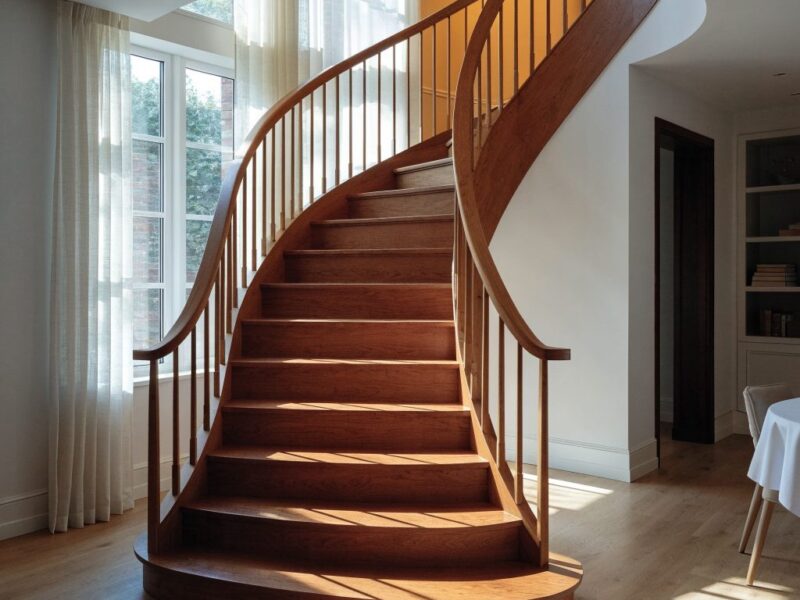
Safety is paramount in stair design. In Poland, the standard stipulates that railings must be at least 90 cm high, and gaps between balusters should not exceed 12 cm. This ensures safety, especially in homes with children. Implementing sturdy railings provides additional support and enhances user confidence when navigating the stairs.
When should you consider using concrete vs. wood?
Concrete stairs are typically recommended during the initial construction phase due to their robust nature when your home structure is in its early stages. In contrast, wooden stairs are better suited for finishing touches, as they complement interior designs beautifully. Their choice depends on the construction stage and desired aesthetic.
For instance, if you are in the framing stage of your home, poured concrete is ideal; however, if the house is finalized, wooden stairs offer a warm and inviting finish.
How to maintain stair connection and stability?
For wooden stairs, they must be securely fastened to the ceiling structure and first-floor foundation using metal brackets or chemical anchors. This prevents wooden components from shifting or creaking over time. Consequently, your stairs remain stable, enhancing longevity and user comfort.
Regular checks for wear and tear are advisable to maintain the spatial integrity of the installation.
How to calculate the number of steps and their angle?
To calculate the number of steps, divide the total height that the stairs will cover by the height of each step. This provides a clear idea of how many steps are needed to complete the staircase and at what angle. The angle of ascent should not exceed 45 degrees for safety and functionality.
For example, if the total height is 250 cm and you’re using 17 cm steps, you will require approximately 15 steps to reach the upper level comfortably.
What is the recommended height and width for steps?
The maximum height for a step should not exceed 19 cm, while the minimum width should be at least 80 cm according to local regulations. This creates a balance between compliance and user satisfaction. Following these guidelines minimizes risk and enhances comfort while using the stairs.
Which tools are essential for DIY stair construction?
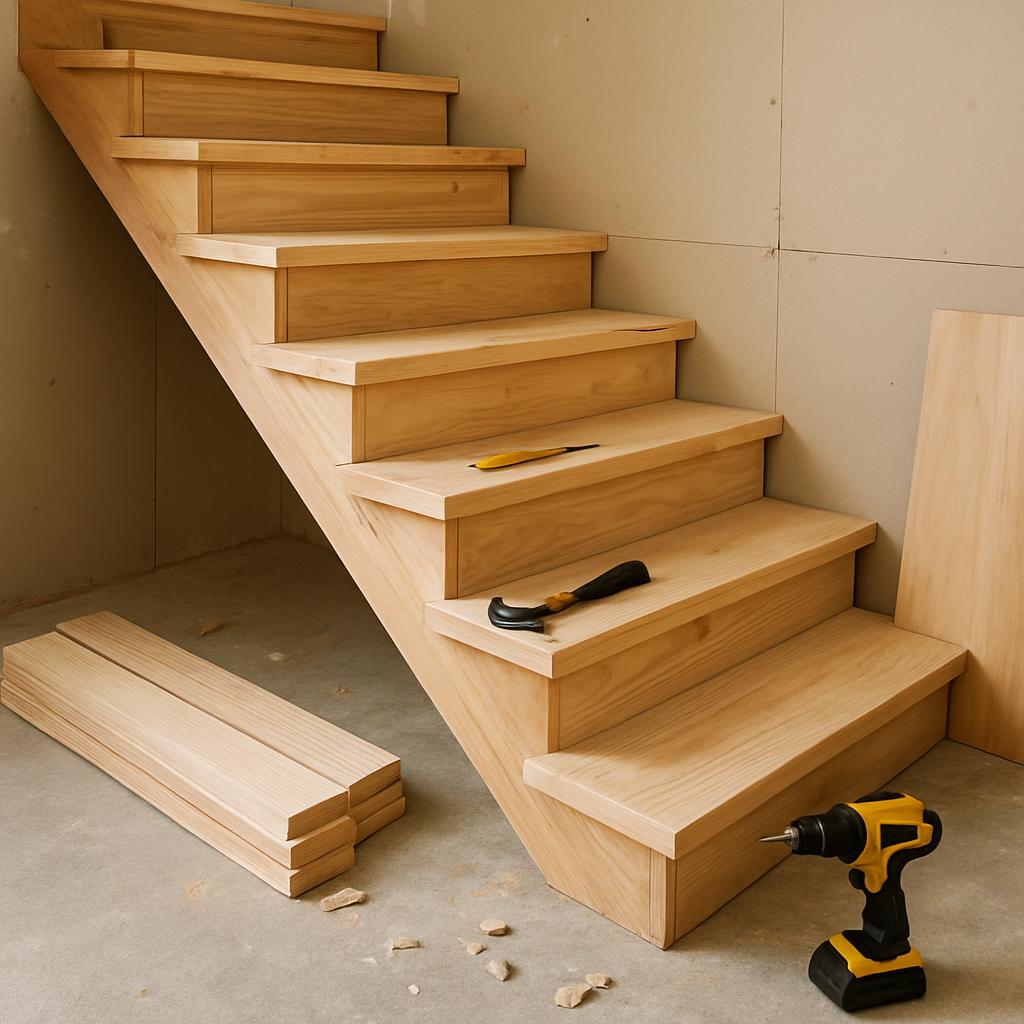
Equipping yourself with the right tools is crucial. Essential tools include a saw, level, measuring tape, drill, and brackets for assembly. Using quality tools ensures precision and safety during the building process. This not only simplifies the task but also enhances the stairs’ overall quality.
| Parameter | Ideal Measurement | Maximum Limit |
|---|---|---|
| Step Height (h) | 17 cm | 19 cm |
| Step Width (s) | 29 cm | 80 cm |
| Rail Height | 90 cm | N/A |
After gathering all necessary materials and tools, you can take your first step toward crafting your own diy stairs successfully. With precision and care, your stairway will not only meet safety standards but also enhance your home’s aesthetic appeal.