We can make open risers stairs more comfortable for pets by pairing a well-fitted stair runner with securely installed mesh that closes risky gaps while keeping the design light. Add gates where needed, improve grip and lighting, and check that every modification is firmly attached before letting pets use the steps. Small changes can help dogs and cats move with greater confidence without giving up the airy look of an open staircase. See how open risers stairs can fit into a considered home design.
How do open riser stairs create risks for pets?
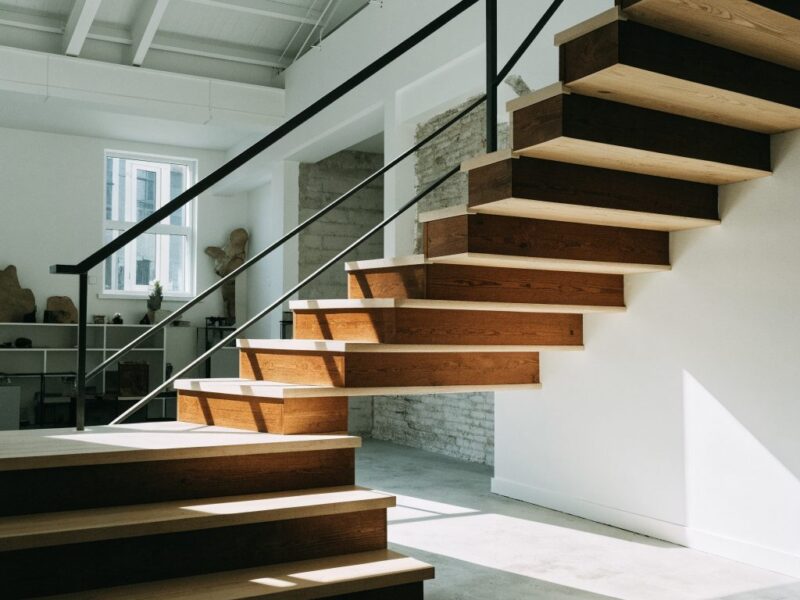
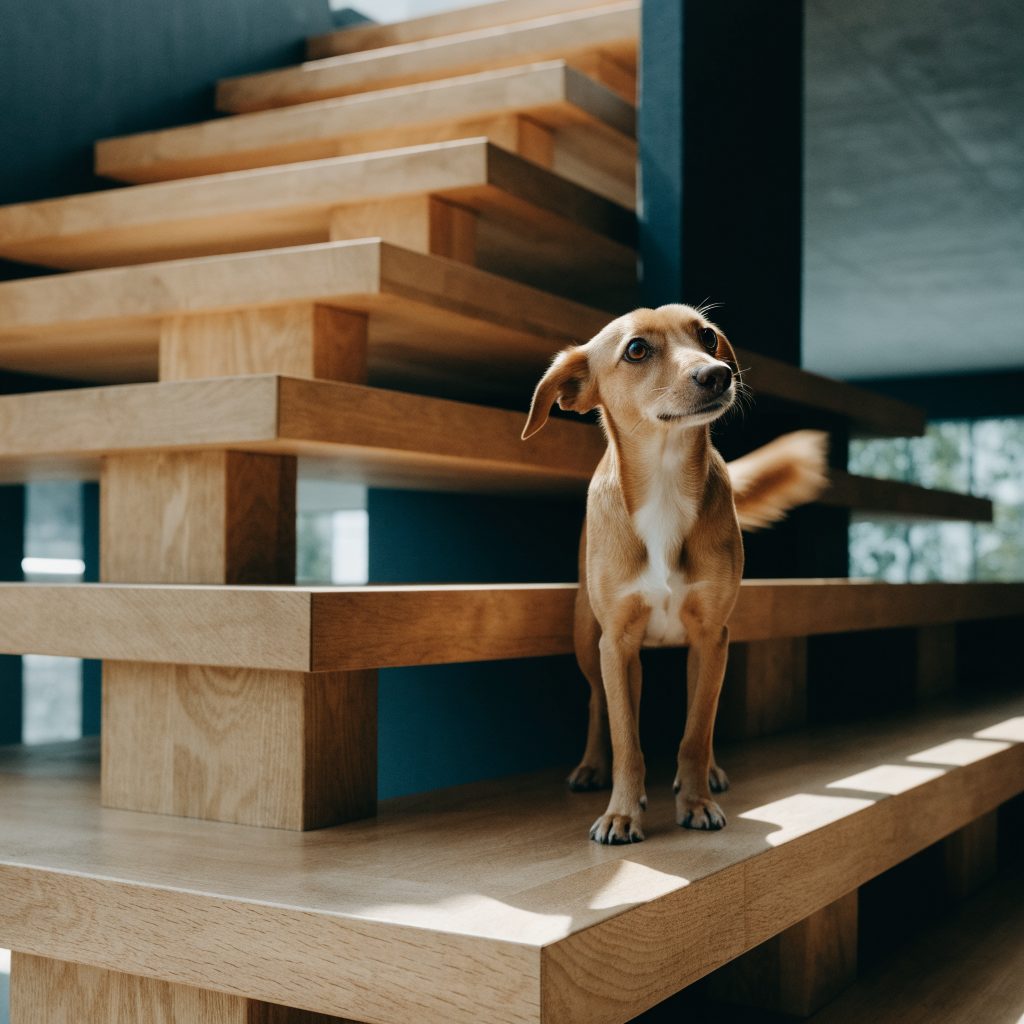
Open risers leave spaces between treads, which may catch a paw or make a pet hesitate, while smooth surfaces can increase the chance of slipping. A staircase that feels manageable for a person may be difficult for a small, young, older, or unsteady animal.
Pets may also misjudge the depth of a step when light is low or the stair edges are hard to distinguish. Watch how your dog or cat approaches the stairs before choosing a solution; their size, confidence, and mobility all matter.
We should treat gaps, traction, and visibility as separate safety issues rather than assuming one retrofit will solve everything.
How can we block gaps without losing the airy look?
Mesh guards, solid riser panels, and securely fitted barriers can reduce access to open spaces while preserving a clean overall design. For a softer visual transition, consider a custom stair runner with mesh discreetly fitted to close gaps, provided the installation is secure and does not create a snagging hazard.
For young pets or times when supervision is limited, a hardware-mounted baby gate at the top and bottom can restrict access. Fabric stair barriers, plexiglass, or mesh netting along the railing are other options; choose a solution that fits the stair shape and cannot be easily pushed loose.
The International Residential Code states that open risers must not allow a 4-inch-diameter sphere to pass through an opening, and that handrails must be installed between 34 and 38 inches high. These requirements provide useful design context, but local rules and the specific staircase should be checked before modifying it.
A neat-looking guard is only useful if it stays firmly in place and closes the openings your pet can reach.
Which changes improve grip and visibility?
Anti-slip treads and carpet runners can improve traction, while lighting beneath the treads can make edges easier to see. Choose materials that sit flat, remain firmly attached, and do not curl or form loose edges that paws could catch.
A runner can also soften the look and feel of the staircase. If you prefer to preserve the visible tread material, discreet anti-slip strips may be a less visually prominent option. Add lighting where shadows make the steps difficult to distinguish, and check that it illuminates the route without creating glare.
Good traction and clear step edges help pets navigate more confidently, especially when the staircase is unfamiliar.
How much can spiral-stair safety modifications cost?
Published estimates for spiral-staircase additions vary by solution: mesh infill panels are listed at €235–700, solid riser panels at €350–935, and carpeted tread strips at €60–235. Treat these as indicative ranges rather than a quote for a particular staircase.
Before choosing a modification, compare how it affects the stair’s appearance, the size of the gaps, and the security of the installation. A professional assessment may help when the stair has a curved shape or when a panel or guard needs custom fitting.
The table gives a simple comparison of the published price ranges and the main purpose of each option.
| Modification | Published price range | Primary purpose |
|---|---|---|
| Mesh infill panels | €235–700 | Close openings while retaining a visually open effect |
| Solid riser panels | €350–935 | Fill the space between treads |
| Carpeted tread strips | €60–235 | Add grip to the walking surface |
Compare options by the protection they provide as well as by their price and visual impact.
When should we restrict a pet’s access to the stairs?
Use a gate or another secure barrier when a pet is new to the home, still learning the route, or unable to manage the steps reliably. Keep access restricted if a guard or tread covering is loose, damaged, or not yet fully installed.
Introduce the staircase gradually and supervise your pet as it learns to use it. If an animal avoids the stairs or appears uncomfortable, do not force the issue; reassess the grip, lighting, and gap protection, and consider limiting access.
Supervision is especially important while a pet is getting used to a new barrier, runner, or stair surface.
How can we plan a pet-safe stair update?
Work through the staircase one safety concern at a time, then check that the finished design remains secure and easy to use. A simple plan helps us balance pet comfort with the clean lines of an open stair.
- Observe how your pet approaches the stairs and identify gaps, slippery areas, and dim sections.
- Choose a suitable gap solution, such as mesh, solid riser panels, or a securely mounted gate.
- Add anti-slip treads or a fitted runner, making sure the edges do not lift or snag.
- Improve visibility with lighting where steps are difficult to distinguish.
- Check all panels, barriers, and coverings for movement or damage before allowing unsupervised access.
A thoughtful combination of gap protection, traction, and lighting can make the stairs more welcoming for pets while respecting the room’s design.
Sources
- Are Floating Stairs Safe for Kids and Pets? A Complete Safety Guide (woodrailingandstairs.com)
- Easy Ways to Close Off a Spiral Staircase (wikihow.com)
- Are Spiral Staircases Safe For Dogs & Cats: Discover Pet-Friendly Staircase Solutions! (bavari-stairs.com)