Understanding silicone sponge seals is essential for maximizing their performance in various applications. This guide will delve into their best uses, limitations, and how to effectively specify them for your needs.
What Are Silicone Sponge Seals?
Silicone sponge seals are versatile sealing solutions created from silicone rubber, characterized by their lightweight and compressible nature. These seals are designed to provide excellent thermal insulation, vibration dampening, and sound attenuation. Their unique properties make them ideal for an array of applications across industries, including automotive, aerospace, and HVAC systems.
Best Uses of Silicone Sponge Seals
Silicone sponge seals excel in a variety of applications due to their robustness and reliability. Here are some of the most common uses:
- Automotive Industry: Silicone sponge seals are extensively used in automotive applications for sealing engine compartments, preventing dirt, noise, and vibration from entering the cabin.
- Aerospace Applications: In aerospace, they ensure tight seals in various components and systems, contributing to safety and performance.
- HVAC Systems: These seals play a crucial role in HVAC installations to prevent air leaks, enhancing energy efficiency.
- Electronics: They protect sensitive electronic components from moisture and dust infiltration, effectively prolonging the lifespan of devices.
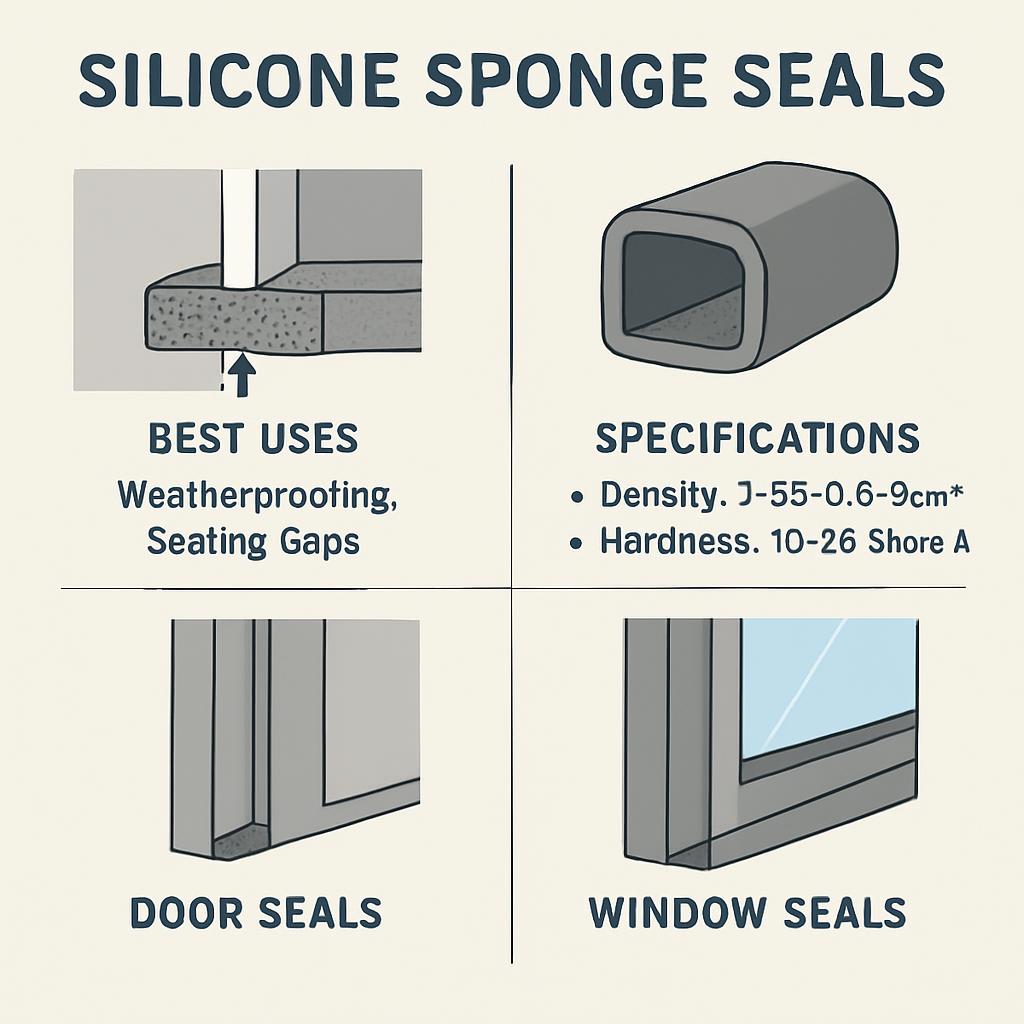
- Construction and Building: Silicone sponge seals are frequently employed to caulk and insulate doors and windows, improving energy efficiency.
Limitations of Silicone Sponge Seals
While silicone sponge seals have numerous advantages, there are also certain limitations to consider:
- Temperature Range: Although silicone can withstand a broad temperature range, extreme conditions may still compromise seal integrity.
- Compression Set Properties: Over prolonged periods, excessive compression may lead to a loss of elasticity, thereby reducing effectiveness.
- Chemical Compatibility: Some silicone rubber formulations may not be suitable for applications involving certain chemicals or fuels, necessitating careful selection.
How to Specify Silicone Sponge Seals Correctly
To achieve optimal performance from silicone sponge seals, it is essential to specify them accurately. Here are several key factors to consider:
- Material Type: Different formulations of silicone offer varying properties. Therefore, choose a type that suits your specific integrity and environmental needs.
- Thickness: The thickness of the seal often affects its performance. Thicker seals generally provide improved insulation but may also require appropriate compression.
- Compression Behavior: Understanding how a seal reacts under pressure is critical for applications that experience fluctuating loads.
- Temperature Operating Range: Clearly define the operational temperature range of your setup, as this will determine the grade of silicone suitable for your project.
- Size and Shape: Accurate measurements of the sealing area are crucial for achieving a secure fit, reducing the chances of leaks or failures.
Conclusion
By focusing on the right specifications and understanding the applications and limitations of silicone sponge seals, users can enhance the longevity and efficiency of their projects. The integration of silicone sponge seals into various systems not only helps in creating effective seals but also aids in maintaining overall functionality. Always consider the unique needs and conditions of your application to select the best possible solution that meets all essential factors.
Whether you are designing a new product or repairing an existing one, silicone sponge seals can provide the reliability and performance needed for optimal function. Investing time in understanding their properties and how to specify them correctly will undoubtedly yield significant benefits.